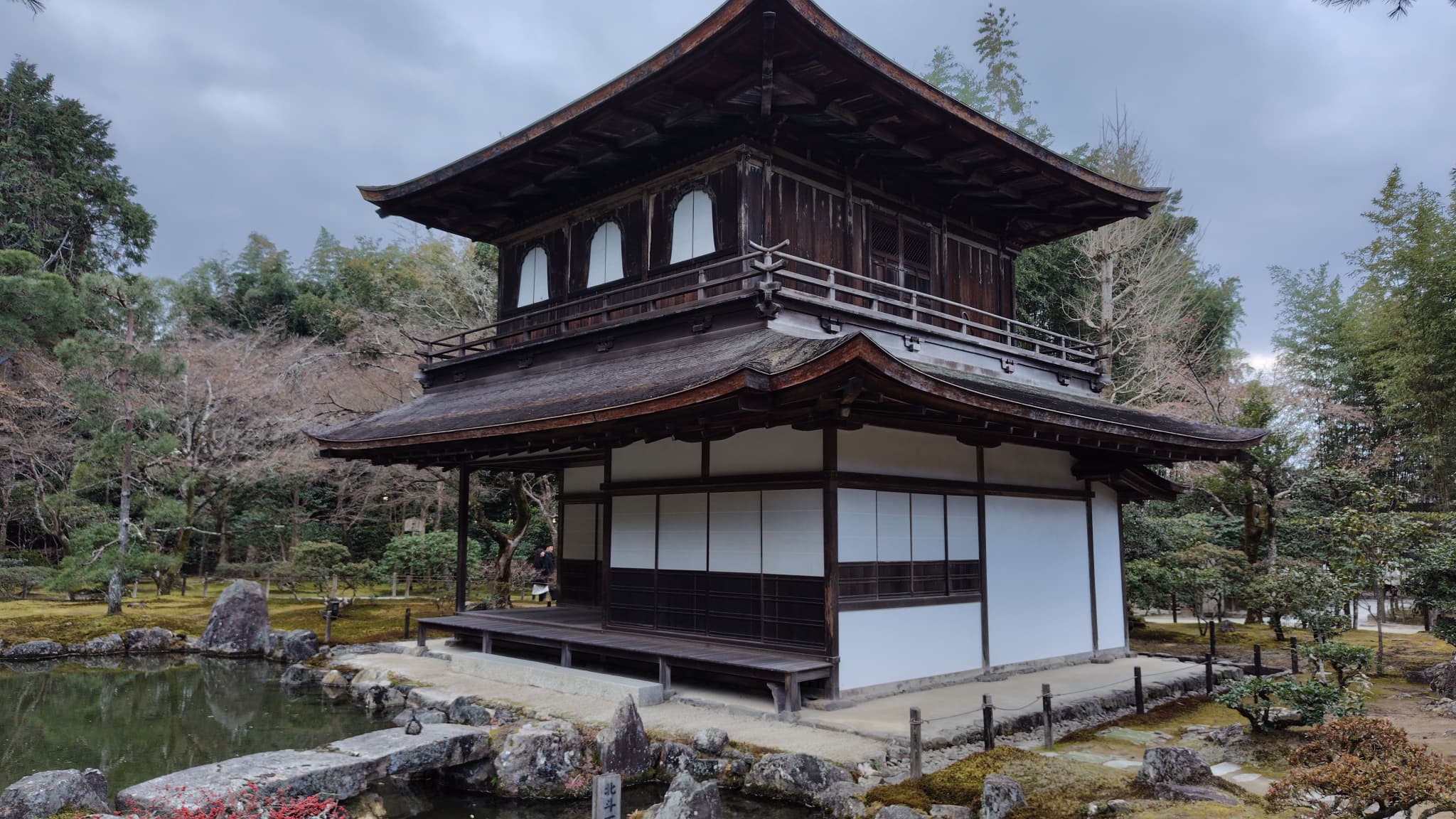
Ginkakuji Temple Overview
Ginkakuji Temple, widely known as the Silver Pavilion, is one of Kyoto’s most iconic Zen temples and a key symbol of Japanese aesthetics. Located in the eastern part of Kyoto, the temple is officially named Jisho-ji Temple and belongs to the Rinzai school of Zen Buddhism.
Ginkakuji stands in the Higashiyama area, a district famous for its historical temples, traditional streets, and scenic walking paths. Unlike many grand religious sites, Ginkakuji is admired for its quiet elegance and subtle beauty rather than lavish decoration.
The temple is registered as part of the Historic Monuments of Ancient Kyoto, a UNESCO World Heritage Site. This designation recognizes Ginkakuji’s exceptional cultural value, particularly its influence on Japanese architecture, garden design, and aesthetic philosophy.
For first-time visitors to Kyoto, Ginkakuji offers a deep introduction to Japan’s spiritual and artistic traditions.
History of Ginkakuji Temple
Ginkakuji Temple was founded in 1482 during the Muromachi period. It was originally constructed as a retirement villa for Ashikaga Yoshimasa, the eighth shogun of the Ashikaga shogunate.
Although Yoshimasa held political power, his reign was marked by internal conflict, including the devastating Ōnin War. Disillusioned with politics, he turned his attention to culture, art, and philosophy. Ginkakuji became the center of his vision for a refined cultural retreat rather than a political stronghold.
After Yoshimasa’s death, the villa was converted into a Zen temple, following his wishes. Over time, it evolved into a spiritual and cultural landmark.
Most importantly, Ginkakuji played a crucial role in the birth of Higashiyama culture. This cultural movement emphasized simplicity, restraint, and intellectual refinement, shaping Japanese arts such as tea ceremony, ink painting, flower arrangement, and garden design. The shift from warrior-centered values to aesthetic and spiritual pursuits marks Ginkakuji as a historical turning point in Japanese culture.
Planning your trip to Kyoto?
Finding the right hotel in a convenient location can make your journey even more enjoyable.
Compare a wide range of hotels, ryokan, and accommodations in Kyoto and find the perfect place for your stay.
👉 Find Hotels in Kyoto


What Is the Silver Pavilion?
Despite its name, the Silver Pavilion is not covered in silver. The term “Ginkaku” was likely inspired by Kinkakuji (the Golden Pavilion), built by Ashikaga Yoshimitsu, the third shogun of the Ashikaga shogunate and the grandfather of Ashikaga Yoshimasa. While Kinkakuji represents political power, wealth, and grandeur, Ginkakuji embodies restraint, modesty, and introspection.
There are theories that Yoshimasa once intended to cover the pavilion in silver foil, but this plan was never realized. Whether intentional or accidental, the absence of silver became a defining characteristic rather than a shortcoming.
Ginkakuji’s understated appearance reflects the Japanese aesthetic philosophy of wabi-sabi, which finds beauty in imperfection, impermanence, and simplicity. In contrast to the dazzling brilliance of gold, the Silver Pavilion invites quiet contemplation and rewards careful observation.
This contrast between gold and silver illustrates two fundamentally different ideals of beauty and values that emerged in Japanese history.
Highlights of Ginkakuji Temple
Kannonden (Silver Pavilion)
The Kannonden, commonly referred to as the Silver Pavilion itself, is a two-story wooden structure overlooking a reflective pond. Its architecture blends aristocratic and Zen elements, creating harmony between the building and its natural surroundings.
The pavilion is dedicated to Kannon, the Bodhisattva of compassion, reflecting its spiritual significance. Viewed across the water, the structure appears calm and balanced, especially on still days when it is mirrored in the pond.
Togudo Hall and the Origin of Shoin-style Architecture
The Togudo Hall is one of the most historically significant buildings at Ginkakuji. Inside is a small study room considered the origin of shoin-style architecture, which later became the standard design for Japanese residential buildings.
This hall is also closely connected to the development of the tea ceremony, representing the fusion of daily life, spirituality, and aesthetic discipline that defines Higashiyama culture.
The Sand Garden: Ginshadan and Kogetsudai
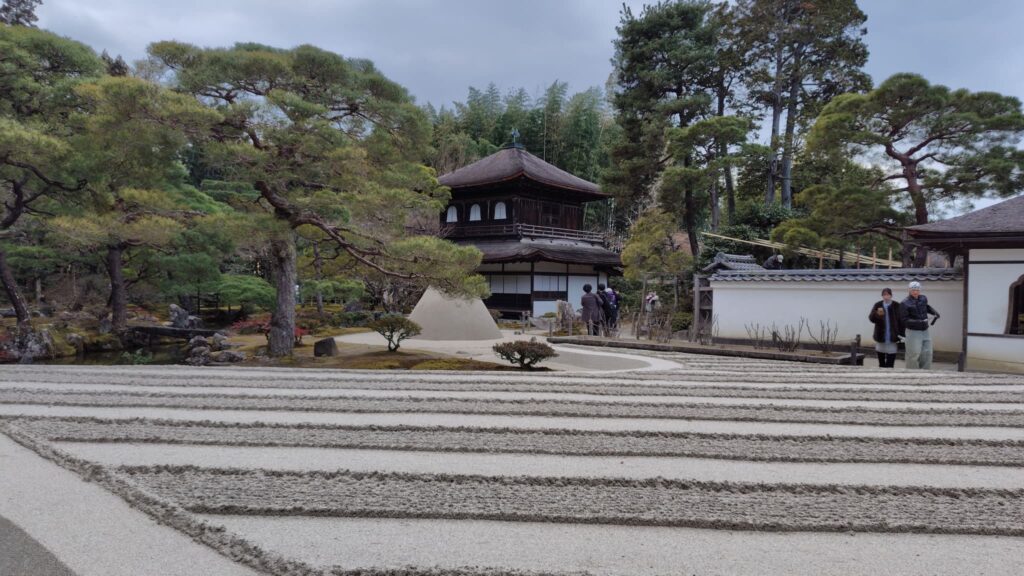
Ginkakuji’s dry sand garden features two famous elements: Ginshadan (Sea of Silver Sand) and Kogetsudai (Moon Viewing Platform).
Ginshadan consists of carefully raked white sand, symbolizing rippling water, while Kogetsudai is a cone-shaped mound said to represent Mount Fuji or serve as a platform for moon viewing. These abstract forms reflect Zen ideals, encouraging visitors to find meaning through contemplation rather than explanation.
The Moss Garden and Walking Path
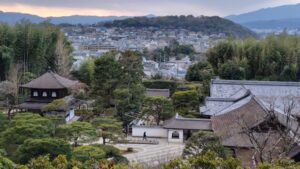
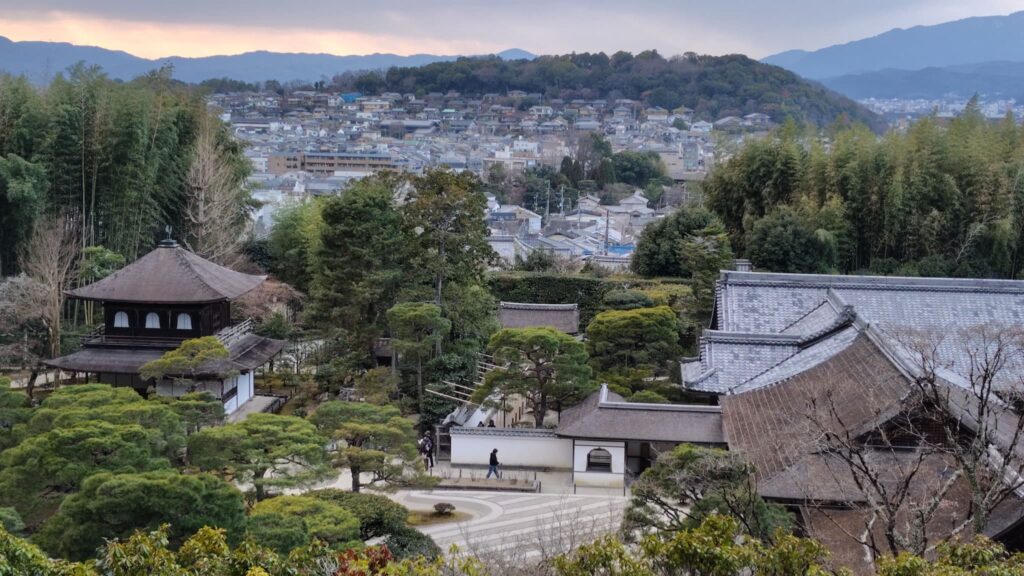
Beyond the sand garden lies a lush moss garden, one of the most atmospheric areas of the temple grounds. A winding walking path leads visitors through shaded greenery and up to a higher viewpoint overlooking the complex.
From above, the view of the pavilion, pond, and surrounding trees reveals the carefully planned harmony between architecture and nature, a hallmark of Japanese garden design.
Many Japanese products are heavily marked up outside Japan.
Availability can also be limited.
Skip the middleman and shop directly from Japan.
Now you can access thousands of authentic products—from watches and electronics to rare collectibles like Pokémon cards.
👉 Click to Explore Japanese Products メルカリ
Ginkakuji and the Philosophy of Wabi-Sabi
Wabi-sabi is a core concept in Japanese aesthetics, emphasizing simplicity, impermanence, and quiet elegance. Rather than seeking perfection, it values natural aging, asymmetry, and subtle detail.
Ginkakuji embodies wabi-sabi through its weathered wood, restrained decoration, and integration with the surrounding landscape. Nothing feels excessive, yet every element feels intentional.
This philosophy has influenced modern Japanese design, architecture, and lifestyle, making Ginkakuji not just a historical site but a living expression of values that continue to shape Japanese culture today.
How to Visit Ginkakuji Temple