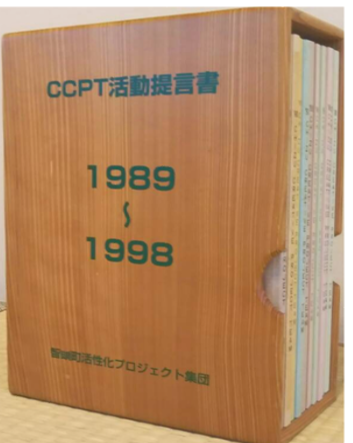
AI Analysis — Comprehensive Edition
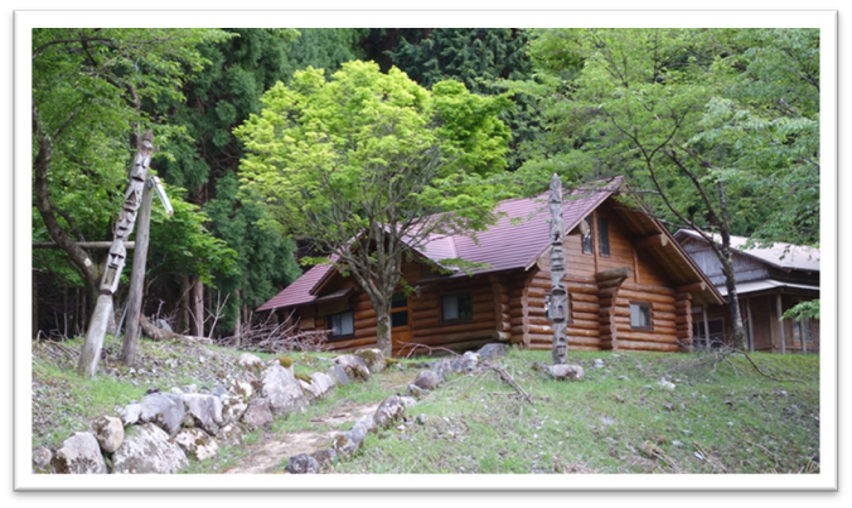
What the 21st Century Left Behind, and What We Can Give to the 22nd Century
Editor: Atsushi Teratani

A Message in Brief
By using chaos theory to recognize the limits of excessive urban density—what CCPT called ugly density—and demonstrating the value of a balanced degree of rural sparsity—beautiful sparsity and precious sparsity—CCPT developed a new vision for regional revitalization. Even after receiving the highest honors, its members disliked the idea of becoming an authority and chose to dissolve their organization voluntarily. Their graceful approach to stepping aside embodied a Small Grand Strategy for the 22nd century: leaving behind a system that would continue to operate independently even after they were gone.
Introduction: From an Underground Stream to a Mighty River — The Story of Fifteen Years
The Initiative That Began with One Person’s Return to His Hometown
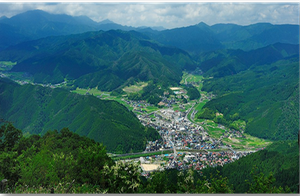
This comprehensive edition presents the complete record of a social experiment in resident-led self-governance conducted between 1984 and 1998 in Chizu, a town of cedar forests located in one of the most remote parts of Tottori Prefecture. The experiment brought together a local postmaster, community residents, and some of Japan’s leading social scientists.
The origins of the entire undertaking can be traced back to 1983, when one man, Atsushi Teratani, returned to his hometown. Having pursued his career at the Chugoku Postal Administration Bureau, Teratani was forced to return home before he had fulfilled his ambitions. At the time, Chizu was enveloped in an atmosphere of resignation and apathy brought on by depopulation and population aging. People tended to think, “There’s nothing we can do about it anyway,” or, “As long as tomorrow is the same as today, that’s good enough.” This was a form of complacency that avoided change and discouraged initiative.
2. A Spiral from “Unconventional Outsider” to National Policy

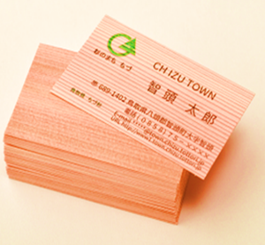
Rejecting a passive way of life, Teratani began sending cedar-wood postcards made from thinly sliced Chizu cedar to people across Japan in 1984. The following year, he created cedar business cards.
His efforts provoked a storm of criticism from the local community. Some accused him of seeking publicity for himself; others claimed he was overstepping the authority of the post office.
Yet this small starting point—moving from zero to one—led to a fateful encounter with Toshiyuki Maehashi, a passionate lumber-mill operator who would later become CCPT’s chairperson. Their collaboration subsequently connected with the intellectual leadership of Professor Norio Okada of Tottori University, now Professor Emeritus at Kyoto University. Through these encounters, a modest local revitalization initiative evolved into an experiment in social systems science that fundamentally challenged conventional approaches to regional development.
The pioneering group later known as CCPT, the Chizu Town Revitalization Project Team, followed a distinctive philosophy: it sought no personal glory, but instead treated knowledge as a shared community asset, or the commons. Fifteen years later, this movement had grown into a powerful current that earned national recognition through the Minister of Home Affairs Award.
This book examines the core ideas contained in the ten volumes of CCPT’s Practical Activity Recommendations (1989–1998). Together, they form a comprehensive account of the Small Grand Strategy for navigating a mature society in the 21st century.
I. Activities Documented in Each Annual Edition
Fiscal Year 1989 — Chizu Cedar Forestpia
1. Identifying the Challenge: A Direct Challenge to the Closed “Basin Mentality”
Apathy in a community hemmed in by mountains: Despite being surrounded by magnificent cedar forests with trees up to 300 years old, Chizu was gripped by a sense of decline and resignation as young people moved to cities and the forestry industry stagnated.
The limits of traditional local ties: The community needed fresh ideas to break through a feudal village structure in which influential local figures and wealthy landowners held most of the decision-making power—a closed, insular society resembling a series of isolated silos.
2. Putting Ideas into Practice: Introducing Two Unconventional Elements at Once—Log Cabins and International Exchange
The philosophy of the initiators—the unconventional pioneers: A small group of volunteers, including people involved in forestry, agriculture, and lumber processing, as well as municipal employees, formed the Chizu Town Revitalization Project Team (CCPT), deliberately stepping beyond the boundaries of established institutions and conventions.
Inviting a specialist from Canada: Judy Upp, a female log-building expert, was invited to Yakotani, a settlement deep in the mountains of Chizu. Working alongside volunteers recruited from across Japan, she helped build five cedar log cabins in just two months.
3. The Systems-Theory Achievement: Awakening at a Single Point Through the Stimulation of Difference
Through everyday interaction with people from overseas, residents underwent a transformation in their attitudes. Previously, they had described their settlement as an embarrassing place at the farthest edge of the town. They began to take pride in it, saying, “This is Yakotani, the village of cedar trees.”
This was an awakening of local identity, brought about by introducing something different into a closed community and stirring up its established assumptions.
Fiscal Year 1990 — In Search of New Social Activities
1. Identifying the Challenge: Moving Beyond Dependence on Individual Charisma
The difficulty of institutionalizing enthusiasm: Successful one-off events, such as the construction of log cabins, depended heavily on the energy of a few leaders. There was a risk that residents would eventually become exhausted if the activities continued to rely on individual enthusiasm.
Breaking through meetings that stifle initiative: The community needed a systematic way to overcome a culture in which good ideas were suppressed by outspoken individuals, objections based on precedent, and resistance to change.
2. Putting Ideas into Practice: Developing the Four-Sided Conference System (SCOSYM)
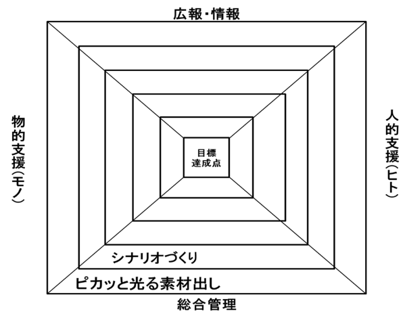
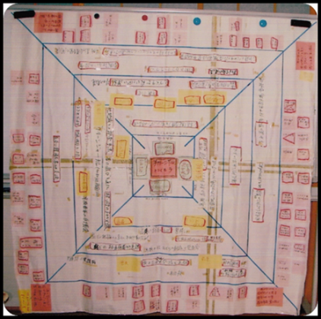
Making discussions visible: The group first conducted events using a large-sheet meeting method, covering the walls with sheets of paper on which participants could freely write down their ideas around a shared theme.
In 1991, under the guidance of Professor Norio Okada of Kyoto University, the group developed the Four-Sided Conference System, known as SCOSYM.
Separating idea generation from evaluation: The process was redesigned so that all ideas—good or bad—could initially be written freely on large sheets of paper without being judged. After a pause, the ideas were evaluated objectively and converted into concrete steps.
3. The Systems-Theory Achievement: Turning a Line into a System by Building a Framework
A technique for motivating people to take ownership: The system was designed so that, by the end of the planning process, every participant understood their role.
A consensus-building model was established in which beginners could gradually become members of a proactive, achievement-oriented team. The key was to create rules that enabled people to become genuinely committed to the work.
Fiscal Year 1991 — A Proposal for a New Lifestyle: Keiju, a Life of Rest and Residence
1. Identifying the Challenge: Questioning Sustainability Amid the Turmoil of the Bubble Economy
Anticipating the limits of urbanization: In 1991, as Japan’s bubble economy approached its collapse, the group recognized early signs of a deeper problem: excessive urban density and the primacy of industrial production were distorting society and leaving people’s inner lives increasingly empty.
Redefining the value of rural communities: Rural areas needed to be understood not merely as subordinate regions supplying timber to cities, but as places where people could live genuinely fulfilling lives.
2. Putting Ideas into Practice: Proposing the Concept of “Keiju” and Building Exchanges with Students from Oregon
A shift in lifestyle: The group proposed a new vision of society called Keiju, a lifestyle centered on rest, residence, and a fulfilling relationship with one’s surroundings. Rather than pursuing the economic convenience associated with density, this vision emphasized a spiritually rich life in harmony with nature.
Anticipating today’s concept of a relationship population: The group designed a cyclical lifestyle in which intellectually engaged urban residents could stay in Chizu, enjoy its natural environment and log cabins, and develop lasting relationships with the local community. This anticipated what is now known in Japan as the relationship population—people who maintain meaningful connections with a region without necessarily living there permanently.
Translating local folktales into English: Working with international students from the University of Oregon, the group translated Chizu’s folktales into English and established a memorization and speech contest for elementary and junior high school students throughout Japan.
3. The Systems-Theory Achievement: Envisioning the Future Across a Broad Social Landscape
A strategy for survival in the 21st century: More than thirty years ahead of their time, the group anticipated concepts now associated with regional engagement and workations. They proposed a lifestyle in which urban and rural communities would complement one another as equal partners.
Fiscal Year 1992 — Rethinking the New Regional Leader: A Proposal for Editorship
1. Identifying the Challenge: The Breakdown of Top-Down Organizations
The burden of assigning one duty to every household: Conventional rural revitalization and government programs were driven by orders and obligations imposed from above. By disregarding the individuality of residents, these approaches made organizations increasingly inactive.
The limits of dependence on charismatic leaders: The group recognized that organizations that simply waited for instructions from a powerful leader would be unable to adapt to a rapidly changing world.
2. Putting Ideas into Practice: Establishing the Organizational Theory of Editorship—”The Core and the Individuals”
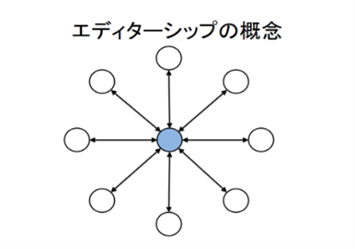
An organization shaped like a cross-section of a mandarin orange: Rather than placing the leader at the top of a pyramid, the group defined the leader as the core at the center of a circle. Around the core, individual members—each with distinct abilities and characteristics—were positioned radially. Their respective strengths and contributions drew them together and helped maintain the balance of the organization.
The spirit of “Teacher and Learner”: The group transformed the traditional, passive idea of learning from someone one carries on one’s back into an active organizational strategy. The core and the individual members were not fixed in their roles. Instead, responsibilities were expected to change dynamically according to the theme or task at hand.
3. The Systems-Theory Achievement: Defining the New Role of the Person Who Weaves People Together
A horizontal network: Rather than moving people through commands, the new leader would discover each person’s differences and weave them into a beautiful, intricate tapestry. CCPT gave a name to this emerging leadership role: the editor, who coordinates diverse people and abilities into a coherent whole.
Fiscal Year 1993 — The Goal Draws Near, and the Goal Moves Farther Away
1. Identifying the Challenge: Guarding Against Complacency on the Eve of a Long-Awaited Infrastructure Breakthrough
The opening of the Chizu Express railway: The opening of the Chizu Express railway, a long-awaited achievement that residents of Tottori Prefecture had pursued for a century since the Meiji era, was approaching at the end of that year. The announcement of a highway route also promised major changes for the region.
Questioning faith in infrastructure: The group rejected the passive assumption that a railway would automatically make the town prosper. With such dramatic changes approaching, it felt that the true value of the community’s collective efforts was about to be tested.
2. Putting Ideas into Practice: Objectively Examining CCPT’s Distinctive Strengths
Putting the organization itself under scrutiny: Atsushi Teratani, chair of the Planning and Development Committee, undertook a critical examination of the eleven years of activity. He identified seven distinctive characteristics, including flexible organizational management and the ability to draw wisdom out of others.
Reaching toward a worldview and a vision of the universe: Referring to his personal motto, “The universe exists because I exist,” Teratani challenged members to consider their approach to life. Would they become mere components with biological functions, or would they continue to question the meaning of their existence?
3. The Systems-Theory Achievement: Objective Metacognition and an Endless Run-Up to the Next Goal
The goal moves farther away: As Professor Okada explained, the moment we approach a goal, the ideal we should pursue moves farther into the distance. The group’s tenth year was therefore defined not as a final destination, but as the starting line for the next level of development. The members renewed their determination and resolved not to become complacent.
Fiscal Year 1994 — A New Wave from Rural and Mountainous Communities
1. Identifying the Challenge: The Breakdown of One-Way Relationships in Postwar Japan
The exploitation of people and resources: After the war, rural and mountainous communities had continually sent two waves toward urban areas in a one-way flow. The first wave consisted of material resources, such as timber and food. The second consisted of people, especially labor, whose departure contributed to rural depopulation. In the process, rural communities had sacrificed much of their own culture.
The inner emptiness of mature cities: Even as urban residents enjoyed material abundance, many experienced a sense of inner emptiness. The group asked whether rural communities had something essential to offer these cities.
2. Putting Ideas into Practice: Defining the Third Wave—”The Heart”—and Applying Chaos Theory
The greatest gift in what had been dismissed as unsophisticated: The group identified the everyday culture developed by rural people living in harmony with nature—including seasonal festivals and the making of traditional rice crackers called kakimochi—as the third wave: the heart. These cultural practices offered urban residents an exceptional experience beyond their ordinary lives.
Critiquing excessive density through chaos theory: Professor Okada used chaos theory to demonstrate that policies focused solely on increasing population numbers and density could send a group onto a terrifying roller coaster, placing it at risk of extinction.
In contrast, he proposed the value of a balanced degree of sparsity, expressed through the concepts of Biso (beautiful sparsity) and Kiso (precious sparsity).
3. The Systems-Theory Achievement: Structural Reform Through Reciprocal Partnership
A partnership in which each side supports the other: Urban and rural communities should not be arranged in a hierarchy. Instead, they should build a mutually beneficial relationship in which each complements what the other lacks. The group argued for a self-reliant partnership, in which both sides actively pull together on the same rope, rather than remaining dependent on one another.
Fiscal Year 1995 — The Era of Creating Social Systems
1. Identifying the Challenge: The Need for a Center of Knowledge to Turn Theory into Practice
Giving a permanent home to ten years of accumulated effort: The group needed a focal point where its intangible achievements—knowledge of social systems science, international exchanges, and a network of riverside parks—could become firmly rooted in the community.
Facing a population aging rate of 24 percent: Rapid population aging and the isolation of elderly people living alone made it urgent to implement a practical, new social system.
2. Putting Ideas into Practice: Opening the Center for Encounters Between Japan, Communities, and Science and Launching the Sunflower System
Completion of the Center for Encounters Between Japan, Communities, and Science: The center was completed and opened on December 16, 1995, with each member contributing ¥500,000 of personal funds. It included a glass-walled research studio called Sairyokusu Kobo and a gathering room centered on a traditional sunken hearth. It was designed as an experimental space where science and the local community could come together.
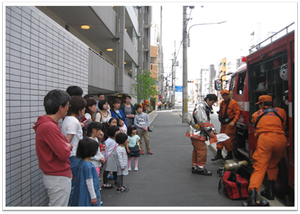
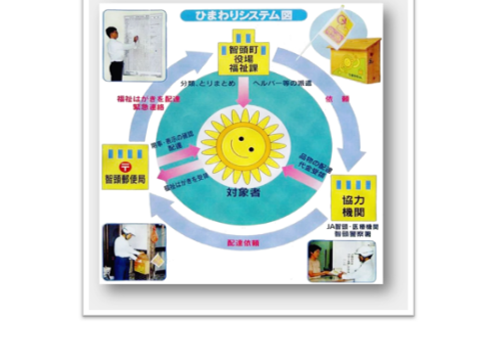
Launching a pilot version of the Sunflower System: Municipal employees and postal workers formed a joint project team. Using the large-sheet meeting method, they designed a system that incorporated postal workers’ daily delivery rounds—hi-mawari, or going around during the day. Postal workers checked for flags indicating that assistance was needed at the homes of elderly people living alone, then delivered medicine and daily necessities as required. The pilot began in the Tomizawa district.
3. The Systems-Theory Achievement: The Moment of Creation and Realization
Starting small and allowing the initiative to grow: This tiny social experiment, which began with just twelve households in Chizu, received the Regional Development Award from the Japan Foundation for International Exchange, following a recommendation by the president of Kyoto University. The spark had been lit for a much larger process of emergence.
Fiscal Year 1996 — The Yufuku System: From Chizu Toward the 21st Century
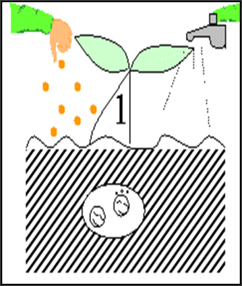
1. Identifying the Challenge: The Limits of Subsidy-Driven Revitalization and the Threat of Settlement Disappearance on a National Scale
The limits of using money to revitalize communities: The National Land Agency announced that 500 settlements could disappear within ten years. This underscored the failure of policies that relied on public works and subsidies to keep people in rural areas.
The risk of imitation without a soul: The Sunflower System was selected for nationwide expansion as a major initiative of the Ministry of Posts and Telecommunications, with a preliminary budget request of ¥7.3 billion for the following fiscal year. However, the group warned that its essential spirit could be lost if the system became a superficial exercise in achieving performance targets.
2. Putting Ideas into Practice: Launching the Japan Zero-to-One Village Revitalization Movement and Establishing a Philosophy of Sharing
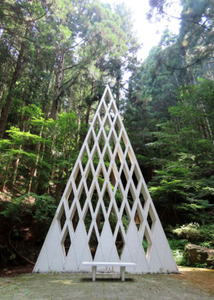
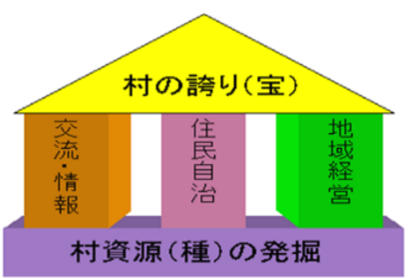
The limitless energy of creating something from nothing: Seven settlements adopted the Zero-to-One Movement, through which residents themselves developed a ten-year action plan—a vision of their future. In the Hayase settlement, residents worked together to build a pavilion called Torio Yasuse and reformed old customs, including simplifying funeral practices.
A shift toward Commonism: The group established a firm principle: “Give all the honors and certificates to those who want them. In return, make sure that the know-how gained through hard work belongs to no individual, but becomes a shared asset—the commons—of the entire community.”
3. The Systems-Theory Achievement: Institutionalization and Emergence on a Larger Scale
Creating a living system: Professor Okada defined a living system as a mechanism that takes fragmented institutions, often divided by administrative boundaries for bureaucratic convenience, and reconnects them at the local level. Such a system responds flexibly to its surroundings and adapts to real-world circumstances.
The Zero-to-One Movement became a new framework for decision-making in the settlements that adopted it.
Fiscal Year 1997 — A Message to the 22nd Century
In fiscal year 1997, CCPT’s activities reached another milestone with the remarkably rapid publication of Community Development Through the Sunflower System by Haru Shobo. The account describes a publication celebration attended by 180 people.
It also documents the remarkable achievements of settlements during the first year of the Zero-to-One Village Revitalization Movement, including the abandonment of entrenched customs through the simplification of funeral practices and the demonstration of what the group called the “equation of realization.”
Furthermore, Chairperson Maehashi examined the devastation of Chizu’s forests and drew parallels with the distortions of today’s overcrowded cities. He left behind a “Message to the 22nd Century,” anticipating future natural disasters and the potential collapse of human society.
Fiscal Year 1998 — Those Who Were There: Become Storytellers of How It All Unfolded
1. The Fifteenth-Year Pinnacle and the Deliberate End of the Organization
In fiscal year 1998, the Japan Zero-to-One Village Revitalization Movement, which CCPT had promoted in partnership with the town government, received the Minister of Home Affairs Award in the category of community development through citizen participation. It was the highest honor the initiative could achieve.
Yet the most radical act in this final chapter was not the acquisition of this honor. It was the formal termination of CCPT’s activities as an organization, a decision carefully planned from the time the Center for Encounters Between Japan, Communities, and Science was built in 1995.
Teratani declared, “Rather than turning everything into a formal system or an authority, the next stage is for each member to take a leap forward in their own field.” With that, he brought the fifteen-year history of CCPT as an organized group to a deliberate close.
2. Designing for a World in Which “I Am No Longer Here”
Teratani’s ultimate philosophy as a systems planner was founded on a simple but far-reaching principle: design systems on the assumption that you yourself will one day be gone.
This was an uncompromising commitment to the right of those directly involved to make their own decisions. Rather than leading a revolution in which one person controlled everything, the objective was to ensure that residents could continue operating the system independently after the original leader stepped aside. Teratani concluded that this kind of cyclical transformation, embodied in the Zero-to-One Movement, was essential to regional management in the 21st century.
Professor Okada called upon everyone who had witnessed these events to become a storyteller who would pass on the story of how this remarkable achievement had come about.
II. The Distinctive Features of CCPT’s Activities
1. The Four-Sided Conference System (SCOSYM)
Making Passion Visible Through Science
One of the most important features distinguishing CCPT from ordinary event organizers across Japan was its development and thorough practical application of a scientific tool for consensus-building. The purpose was to prevent activities from being dominated by individual personalities or the opinions of influential people who spoke the loudest.
At the heart of this approach was the Four-Sided Conference System (SCOSYM), developed under the guidance of Professor Norio Okada and presented at the Japan Society of Civil Engineers. It was a system designed to bring conflicts and disagreements into the open rather than suppress them, and then use them as a basis for reaching consensus.
Separating Idea Generation from Evaluation
The large-sheet meeting method was a practical technique that grew out of this approach.
In local meetings, even excellent ideas are often immediately dismissed with arguments such as “We don’t have the money” or “We’ve never done that before.” CCPT covered the walls of its meeting room with large sheets of paper and prohibited all criticism and evaluation during the brainstorming stage.
Only after every idea had been made visible and participants had exhausted their ideas did the group move on to evaluation and the development of an implementation process. By separating these stages, CCPT was able both to combine diverse knowledge and to create a team in which everyone shared the same goals.
2. The Horizontal Network of “Editorship”
An Organization Shaped Like a Cross-Section of a Mandarin Orange, Rejecting Top-Down Leadership
To overcome the barriers of family lineage, status, and position that characterized traditional rural society, CCPT rejected hierarchical, top-down leadership and introduced its own horizontal organizational theory, known as Editorship.
Teratani illustrated this concept with a cross-section of a mandarin orange. At the center was the core, or editor, surrounded by individual members—the individuals—each bringing their own expertise and distinctive characteristics. These members were connected horizontally rather than arranged in a hierarchy.
A Dynamic Organization in Which the Core and Individuals Exchange Roles
The relationship between the core and the individual members was not hierarchical. Instead, they attracted and balanced one another according to the relative weight of their individual characteristics and strengths. The relationship was dynamic, with a productive tension between its participants.
Furthermore, depending on the theme or nature of a project, the core and the individual members could exchange positions and leadership roles at any time.
This flexible network resembled the segments of a mandarin orange, each contributing to the formation of a single fruit. It became the foundation for an organization that combined democratic participation with a strong capacity for execution.
3. “Teacher and Learner”: Encouraging Active Learning
Turning “Learning from the Child One Carries on One’s Back” into an Active Strategy
One of the most distinctive concepts in CCPT’s approach to self-transformation was Senseito, or “Teacher and Learner.”
The term was coined by taking the traditional Japanese saying that one can learn from the child one carries on one’s back—a reminder that even those in subordinate positions may teach us something—and transforming its passive implication into an active organizational strategy.
The concept describes a fluid exchange of knowledge in which the learner sometimes becomes the teacher, and the teacher sometimes becomes the learner.
Study Sessions as a Source of “Emergent Fluctuation”
CCPT invited leading social scientists and advisers from Japan and abroad to Chizu. It organized the Sugishita Sonjuku, in which participants spent three days and two nights living and learning together in log cabins, as well as Kudoku-kai study sessions held four times a year, each lasting three hours.
These were not occasions for academics to deliver one-way lectures. Instead, researchers confronted the practical experiences of local residents—the community’s shared, locally grounded knowledge—with theory and universal scientific perspectives.
Participants continually exchanged the roles of teacher and learner, critically examining and learning from one another’s work.
This intellectual friction helped members acquire a new way of seeing: the conceptual “glasses” of social systems science that enabled them to perceive things that would otherwise remain invisible.
4. Commonism: A Philosophy of Sharing
The Monopoly on “I Did It” Can Kill a Community
Teratani and Chairperson Maehashi recognized what they considered the greatest defect of Japan’s traditional village society: its politics of local bosses and influential figures.
Even when someone devoted enormous effort to creating a new initiative, a powerful person with an impressive title might ultimately take credit for the achievement. The person who had actually done the work would be left with a certificate of commendation, while the community retained none of the practical knowledge gained through the effort.
This structure drove young people and those doing the actual work into despair, contributing to the decline and stagnation of local communities.
Abandoning Personal Glory and Making Wisdom a Common Asset
CCPT pursued the opposite philosophy: Commonism, or the principle of making knowledge a shared asset.
At the beginning of their activities, Maehashi and Teratani agreed on an approach along these lines:
“Give all the honors and certificates to those who want to say, ‘I did it.’ We will seek no credit for ourselves. Instead, we will leave behind the know-how gained through practice as a shared asset of this community.”
By spreading out the metaphorical cloth and saying, “Please, take it and use it as you wish,” they made their knowledge available to everyone.
This open-minded attitude, free from the desire for personal recognition, helped create an environment in which residents began to feel that the initiative truly belonged to them. It awakened their sense of ownership and inspired them to take action themselves.
III. Three Fundamental Propositions of CCPT Through the Lens of Social Systems Theory
Over fifteen years of activity, including the ten years during which its recommendations were published, CCPT left a legacy that went far beyond a local success story about regional revitalization.
With remarkable foresight, it anticipated the impasse facing Japan’s postwar economic growth and modernization. From the most remote parts of rural Japan, it presented a practical and broadly applicable theory of social systems transformation that challenged the design of national institutions.
The intellectual framework of CCPT emerged from the fusion of Atsushi Teratani’s passion and the expertise of leading social scientists, including Professor Norio Okada and Professor Toshio Sugiman of Kyoto University. Its central ideas can be summarized in three fundamental propositions.
Proposition 1: From Psychological Inertia to the Capacity for Self-Determination
For fifty years after World War II, Japanese society was dominated by a uniform, centralized system of governance and a corresponding attitude of complacency in rural areas that depended on it.
In Chizu, this mentality appeared in statements such as “There’s nothing here anyway” and “The authorities will decide for us.” Social systems science described this sense of helplessness and withdrawal as psychological inertia—a frozen state in which people cease to act on their own initiative.
1. From a “Dead System” Suffering from Institutional Fatigue to a “Living System” That Generates Emergence
The administrative bodies and public institutions built by twentieth-century modern society resembled stones falling along a predetermined trajectory. They responded neatly to the laws of gravity—established precedents, rules, and manuals—but possessed no life of their own. When faced with unexpected changes or crises, they could freeze completely and stop thinking.
Through fifteen years of social experimentation, CCPT demonstrated an alternative: a living social system resembling a bird that continually adjusts its course while flying, responding sensitively to changes in its surroundings, including residents’ urgent needs and their expressions of genuine human emotion.
This approach fundamentally rejected centralized planning that imposed systems from above, like a service delivered from outside to a passive recipient.
Consider the Sunflower System. Rather than discarding the extra time, labor, and flexibility embedded in postal workers’ ordinary daily delivery rounds, the system made productive use of this surplus capacity—what CCPT called dabudabu, or slack and redundancy. It connected these existing routines with the local need to look after elderly people living alone.
The essence of the Sunflower System lay in bringing face-to-face communication into the seemingly unproductive parts of everyday life. It discovered extraordinary social value in the seemingly useless that is useful and in activities provided for free—not because they lack value, but because their value cannot easily be expressed in monetary terms.
Similarly, the Zero-to-One Village Revitalization Movement, in which municipal employees and residents debated vigorously in front of walls covered with large sheets of paper, was a process-based living system. It operated at the edge of chaos, where the future was uncertain, while those directly involved continuously developed rules and plans—visions of the future—based on actual circumstances.
Viewed through the conceptual lens of social systems science, genuine regional revitalization was not a form of life support supplied through outside subsidies or public works. It was a process of transforming ordinary, everyday life into an active subject of observation and practice, thereby stimulating the renewal and improvement of the system itself.
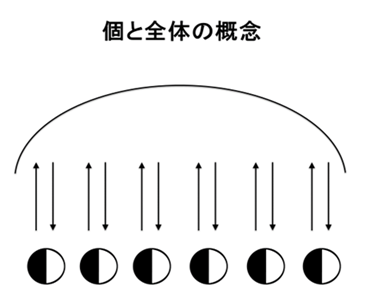
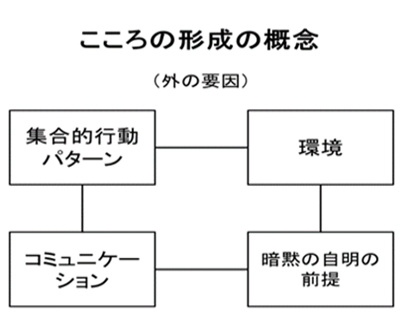
Proposition 2: From the Silo Mentality of Status to Commonism, Which Weaves Differences Together
The second fundamental challenge faced by CCPT was the combination of deeply rooted feudal community norms in rural villages and the silo-like barriers of status and position created by modernization.
Traditional village society often disregarded individual talents, personalities, and intelligence. Instead, it operated through compulsory obligations, such as assigning one duty to every household. Under this arrangement, entrenched local bosses rejected new initiatives, while the practical knowledge of those who had done the hard work disappeared and only the bosses retained the honors and certificates.
Modern administrative bodies and corporations reproduced a similar problem in a different form. People became confined by their professional identities—municipal employees, postal workers, bank employees—and the gap between their official roles and their personal feelings. They became, in effect, “Stone Age people in modern clothing,” forgetting how to engage with their communities as whole human beings.
In response, CCPT proposed three new principles grounded in group dynamics: rules, roles, and tools.
Rules — “Wearing Two Pairs of Sandals” and Democratizing Decision-Making
Rather than directly rejecting and eliminating traditional systems, CCPT allowed the old arrangements and the new Zero-to-One system to operate side by side. This was described as “wearing two pairs of sandals.”
Residents could compare the two approaches and choose for themselves which worked better. The result was a fundamental shift toward a decision-making process in which willing participants came together and made choices on the premise of self-reliance.
Roles — Editorship Based on the Core and the Individuals
CCPT rejected pyramid-shaped, top-down leadership based on commands. Instead, it established a horizontal form of leadership in which individual members, each with their own distinct characteristics, were connected around a central editor—the core—like the segments of a mandarin orange.
Their different strengths balanced one another dynamically, and leadership roles could be exchanged as circumstances changed.
Tools — The Large-Sheet Meeting Method and the Visualization of Shared Space
By separating idea generation from evaluation and covering an entire wall with blank sheets of paper for brainstorming, CCPT developed a tool that helped participants become a motivated, goal-oriented team sharing a common objective.
The integration of these three principles led to the ultimate expression of CCPT’s philosophy: Commonism.
Chairperson Maehashi and Teratani consistently upheld a radical philosophy of selflessness:
“Give all the credit and honors, including certificates of commendation, to those who want them—the bosses and the authorities. If they become motivated to act, we have already won. In return, the know-how gained through practice must belong to no individual. It must remain in this community as a shared public asset.”
By spreading out the metaphorical cloth and declaring, “It belongs to no one; use it as you wish,” they made their knowledge common property. As a result, it did not remain locked away in individual hands. Over fifteen years, it became deeply embedded in the soil of Chizu.
Proposition 3: From the “Ugly Density” of Megacities to the “Beautiful and Precious Sparsity” of Rural Communities
The third proposition reached by CCPT after fifteen years of practice was a powerful rebuttal to the postwar Japanese dogma of expansion, excessive density, and economic efficiency. It also offered a strategy for human survival extending from the 21st into the 22nd century, based on the cyclical relationship between humanity and nature.
For fifty years after the war, Japanese society had been dominated by a mechanical, cerebral value system that equated bigness with success. Communities competed over population numbers and monetary totals. Rural areas were reduced to one-way suppliers of material goods, such as food and timber, and people, especially young workers. This first and second wave of supply contributed to the depopulation and breakdown of rural communities.
Meanwhile, the overcrowded cities receiving these resources had traded away something essential—the human heart—in exchange for material convenience. Human relationships became fragmented into functional parts, while society faced the risks of what might be called negative emergence, exemplified by dioxins, endocrine-disrupting chemicals, and other environmental threats.
Using chaos theory, Professor Okada mathematically demonstrated that a society that relentlessly pursues population growth and excessive density without regard for appropriate limits risks entering a terrifying roller coaster of extreme fluctuations between high and low states, potentially threatening the survival of the group.
He called the ugly form of excessive density produced by this arrogance of relentless concentration Shumitsu, or “ugly density.”
In contrast, he identified the value of Biso (“beautiful sparsity”) and Kiso (“precious sparsity”), in which a balanced degree of sparsity allows rich time, space, and human relationships to flourish.
Teratani’s concept of the third wave from rural areas—the heart—referred to the everyday culture that rural communities had patiently developed while living in harmony with nature, including the making of traditional rice crackers and seasonal festivals. For urban residents, these ordinary practices, often dismissed as old-fashioned or backward, represented an extraordinary form of value and information.
In a digital society that has become increasingly systematized and emotionally parched, this everyday rural culture can satisfy a deep human hunger. It is one of the most valuable gifts rural communities can offer the cities of the 21st century.
Chairperson Maehashi walked through a devastated forty-year-old cedar forest in which the trees had been planted so densely that sunlight could not reach the ground. Not even a blade of grass could grow, and the soil was crumbling into irregular hollows. He recognized precisely the same distortion in the foundations of overcrowded cities.
“When nutrients—convenience—are readily available nearby, roots—self-reliance—do not grow deep. The trees become complacent and weak. If things continue this way, the mountains will rebel. At the same time, the foundations of the great cities will crumble.”
The condition of the mountains, forests, and seas is inseparable from the condition of human society.
These environments are interconnected as closely as the capillaries in the human body. Chains of small-scale cycles combine to form the larger cycles of the global environment.
CCPT’s riverside gathering places, including the Oyagawa Waterside Park, the renewal of settlements through the Zero-to-One Movement, and the Center for Encounters Between Japan, Communities, and Science were all experimental spaces intended to restore the value of these lost small-scale cycles to human life.
Sparsity helps balance density. It is the coexistence of sparse and dense areas that allows air to vibrate and energy to form waves through which the heart can communicate.
The 21st century, CCPT suggested, would become an era of rediscovering the wisdom of the past in a spiral of renewal. Urban residents would gradually recognize their own vulnerability and come to appreciate the beautiful and precious sparsity of rural communities as an indispensable shared resource.
We must relearn from local communities a capacity for survival that goes beyond rigid, mechanical infrastructure and embraces the whole of life, restoring the warmth and human touch that formal systems often leave out.
CCPT’s fifteen-year experiment in Chizu was a challenge from rural Japan to the modernizing society of the 20th century. It left a lesson about the importance of awakening individual human beings and strengthening their ability to determine their own futures.
The record of an organization that deliberately refused to pursue institutional permanence, choosing instead to build a system that residents could operate independently, is a time capsule for people who will live in the 22nd century.
The responsibility for bringing the wisdom of the past to life in today’s communities now rests with each reader.
IV. The Three Major Values of the “Chizu Equation”
1. Concepts Decades Ahead of Their Time: The Answers to Today’s Regional Revitalization Challenges Were Already There
One of the most astonishing discoveries in this book is that many important concepts now promoted by Japanese government agencies and experts in the 2020s—including the relationship population, workations, local digital transformation (DX), and the institutionalization of resident-led self-governance—had already been articulated and put into practice in Chizu more than thirty years earlier, between 1991 and 1995.
At the height of Japan’s bubble economy, Professor Okada and Teratani recognized, through chaos theory, the limits of urban overcrowding and the excessive prioritization of industrial production. They proposed the value of an appropriate degree of sparsity, expressed through the concepts of beautiful and precious sparsity.
Their foresight remains an enduring guide—a kind of bible—for today’s efforts to build a decentralized society.
2. A Blueprint for a Living Organization: Editorship and Commonism
Many regional initiatives and organizational reforms decline when a charismatic leader retires or subsidies are withdrawn. CCPT, however, identified at an early stage a fundamental mechanism behind organizational dysfunction: the monopolization of honors and credit.
Its horizontal leadership model, represented by the mandarin-orange cross-section and the relationship between the core and individual members, provided an alternative to hierarchical leadership.
Its philosophy of Commonism was equally distinctive: give away the honors and certificates, but preserve practical wisdom and know-how as shared assets.
This philosophy represents a powerful model for contemporary open-source initiatives, nonprofit organizations, and community management.
3. The Ultimate Theory of Planning: The Art of Designing for a World in Which “I Am No Longer Here”
The most radical act in the final chapter of this book is the decision to end CCPT as an organization at the very moment it reached its highest achievement in its fifteenth year and received the Minister of Home Affairs Award.
Teratani feared that turning everything into a formalized system or an authority would create a dead system. His philosophy was to anticipate a world in which he would no longer be present and leave behind rules that would enable residents to continue operating the system independently.
This is a philosophy of designing a graceful transition—one that enables a system to survive beyond its founders. It is a powerful lesson for entrepreneurs and innovators alike.
By carefully entrusting this vast historical record, layer by layer, to readers who can move from having witnessed these events to becoming practitioners who shape the future, we have extracted a major message for the 22nd century from the maze of challenges surrounding depopulation and population aging, documented across approximately 2,000 pages.
This AI Analysis: Comprehensive Edition is a time capsule, but it is also much more than a historical record. It is a practical set of tools—rules, roles, and tools themselves—for actively navigating the challenges of the coming era.
I offer my heartfelt gratitude and profound appreciation for having been able to accompany this remarkable journey of intellectual synthesis as a storyteller deeply immersed in the history of these events.
The AI analysis and comprehensive documentation of CCPT’s Practical Activity Recommendations, covering the editions from 1989 through 1998, is now complete.
Afterword: From an Underground Stream to a Mighty River, and a Message to the 22nd Century
In 1984, one person planted a seed in the form of a single cedar-wood postcard, sent from a small post office in Chizu. Over fifteen years, that seed grew into a mighty river of change. It broke through administrative barriers, challenged entrenched customs in rural settlements, and ultimately influenced national policy, earning the Minister of Home Affairs Award.
The ten-volume series of CCPT’s Practical Activity Recommendations presents us with much more than a beautiful success story. It is a comprehensive examination of a living social system—a record of an almost audacious determination to reclaim the in-between that 20th-century modernization discarded in pursuit of efficiency and rationality.
This in-between encompasses space, time, and human relationships: the room, time, and human connection that make a fulfilling life possible.
In fiscal year 1998, even as CCPT received its highest honors, it had already envisioned a world in which its members would no longer be present. The organization voluntarily brought its own activities to an end because its members feared nothing more than the organization becoming an authority, with its people lapsing into complacency behind the silo-like barriers of status and position.
They passed the honors on to others and allowed the wisdom and know-how accumulated over fifteen years to spread through the soil of Chizu as a shared community asset.
That is precisely why the spirit of their work continues to live on, taking new forms and inspiring new people.
“Those who were there, become storytellers of how it all unfolded.”
Our responsibility, as readers who have become deeply involved in the history of these fifteen years, is not simply to look back fondly on the achievements of the past.
Today, as the ugly density of major cities shows signs of impending breakdown and communities throughout Japan remain trapped in the maze of depopulation and population aging, we must put the Chizu Equation into practice in the communities and workplaces immediately before us.
The equation is expressed as:
Realization = Identity × Theme × Risk
Its message is clear: we must create something from zero to one through our own actions, starting with the circumstances directly in front of us.
The value of each individual day contributes to the value of ten years. In time, those daily efforts can become a powerful message for the 22nd century: the Small Grand Strategy.
The dawn of the 22nd century, which CCPT’s members envisioned through the smoke rising from the sunken hearth at the Center for Encounters Between Japan, Communities, and Science, is quietly waiting to be created by our own hands.
The comprehensive edition documenting the full history of CCPT’s Practical Activity Recommendations from 1989 through 1998 is now complete. It brings together the entire body of work, organized into an introduction, annual summaries, distinctive characteristics, three fundamental propositions, the three major values of the Chizu Equation, and this afterword.
I am grateful for the opportunity to make this work available to the public.
A note from Teratani on the editorial process
The ten volumes of CCPT’s Practical Activity Recommendations—approximately 2,000 pages and two million Japanese characters in total—were preserved in PDF format by Professor Toshio Sugiman.
I can only imagine how much effort this enormous undertaking required. At one point, I was generously given the data. I then had AI read and analyze it in half a day.
I would like to express my deepest gratitude to Professor Sugiman for his thoughtfulness and generosity.
(The AI’s analysis will be aligned with this book when it is provided with the theme: “The Significance of Publishing the ‘Zero-to-One (Emergence) Small Grand Strategy.'”)
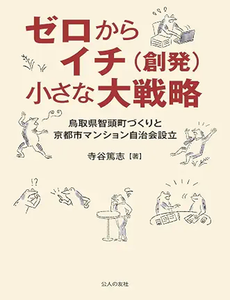
Cover photograph: “The Recommendations and the Cedar-Wood Box” and “Judy House in the Cedar Village.”